

In Part I, we explored some of the most common misconceptions about managed care pharmacy – from the belief that it’s only about cutting costs to the assumption that it’s not clinical or patient-centered. But the misunderstandings don’t stop there.
In this second part of the series, we’ll continue unpacking what managed care pharmacy actually looks like by addressing even more myths that often discourage pharmacists and students from exploring this rewarding field.
Let’s dive into the next set of misconceptions – and continue setting the record straight.
Misconception #4: “It’s Boring Compared to Hospital or Retail Work”
People unfamiliar with the variety of responsibilities managed care pharmacists take on may assume that this work is dry, repetitive, or less exciting than the fast-paced environment of hospitals or retail pharmacies.
Here’s why that’s far from true:
Managed care is a rapidly evolving space. Each year, new therapies – including biosimilars, oncology drugs, gene therapies, and rare disease treatments – enter the market, raising complex questions about clinical value, ethical access, long-term outcomes, and economic impact. Pharmacists play a key role in determining how these therapies fit into the current standards of care and how they compare to existing treatments with more established efficacy, safety, and cost-effectiveness profiles.
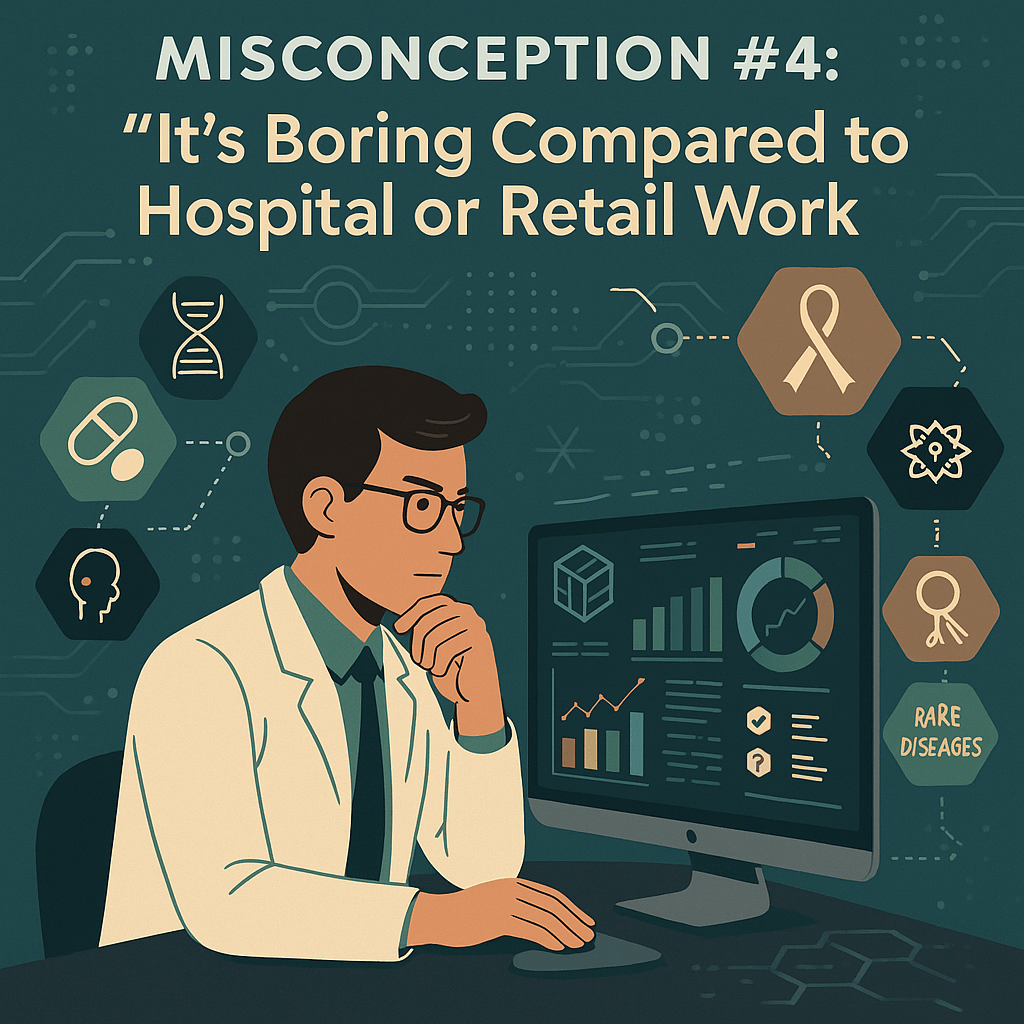
From a regulatory standpoint, managed care pharmacists also help organizations navigate the ever-changing landscape shaped by the FDA, CMS, and state-level policies. If you’re interested in innovation, population health, and shaping the future of care delivery, managed care is one of the most dynamic and impactful career paths in pharmacy.
Misconception #5: “Managed Care Pharmacists Sell Their Souls to the Devils”
It’s not uncommon to hear remarks suggesting that managed care pharmacists are “working for the dark side” – prioritizing profits over patients or aligning with payers at the expense of care quality. This perception often stems from a misunderstanding of how complex and interconnected the healthcare system really is.
In truth, managed care pharmacists are held to the same clinical and ethical standards as any other area of practice. Their job is not to deny care, but to ensure patients have access to safe, evidence-based, and cost-effective therapies that support population health.
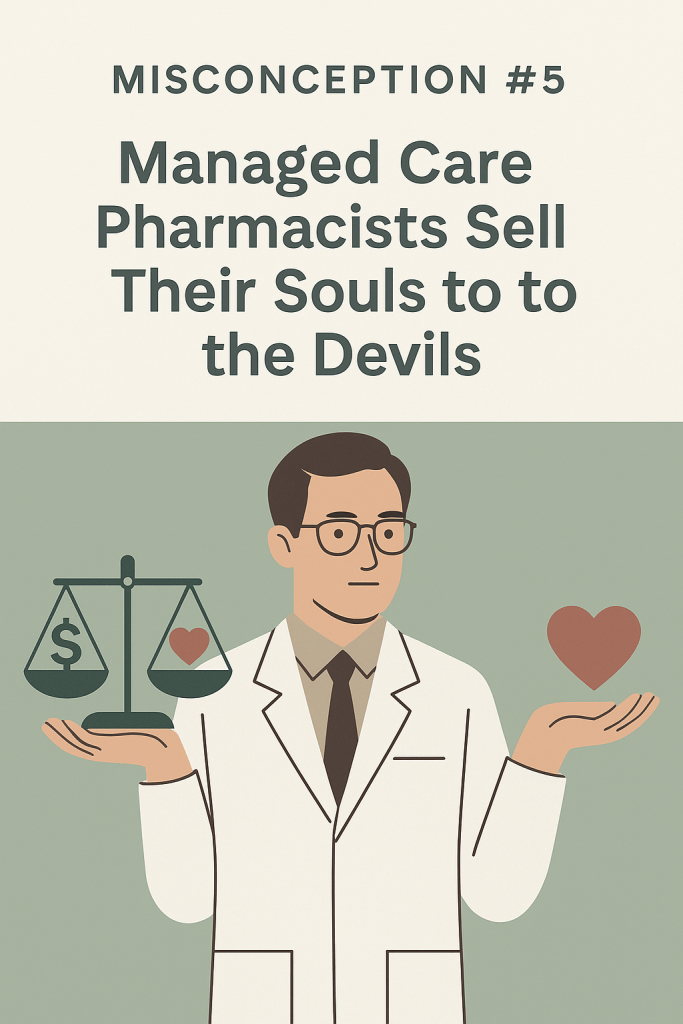
Far from “selling out,” these pharmacists make thoughtful, data-driven decisions – balancing clinical guidelines, drug safety, real-world outcomes, and system sustainability. They advocate for the responsible use of limited healthcare resources, ensuring that patients who truly need high-cost therapies receive them, while also helping avoid waste, overuse, and misuse. Managed care pharmacists don’t work against providers or patients – they work with them to build more equitable and effective care.
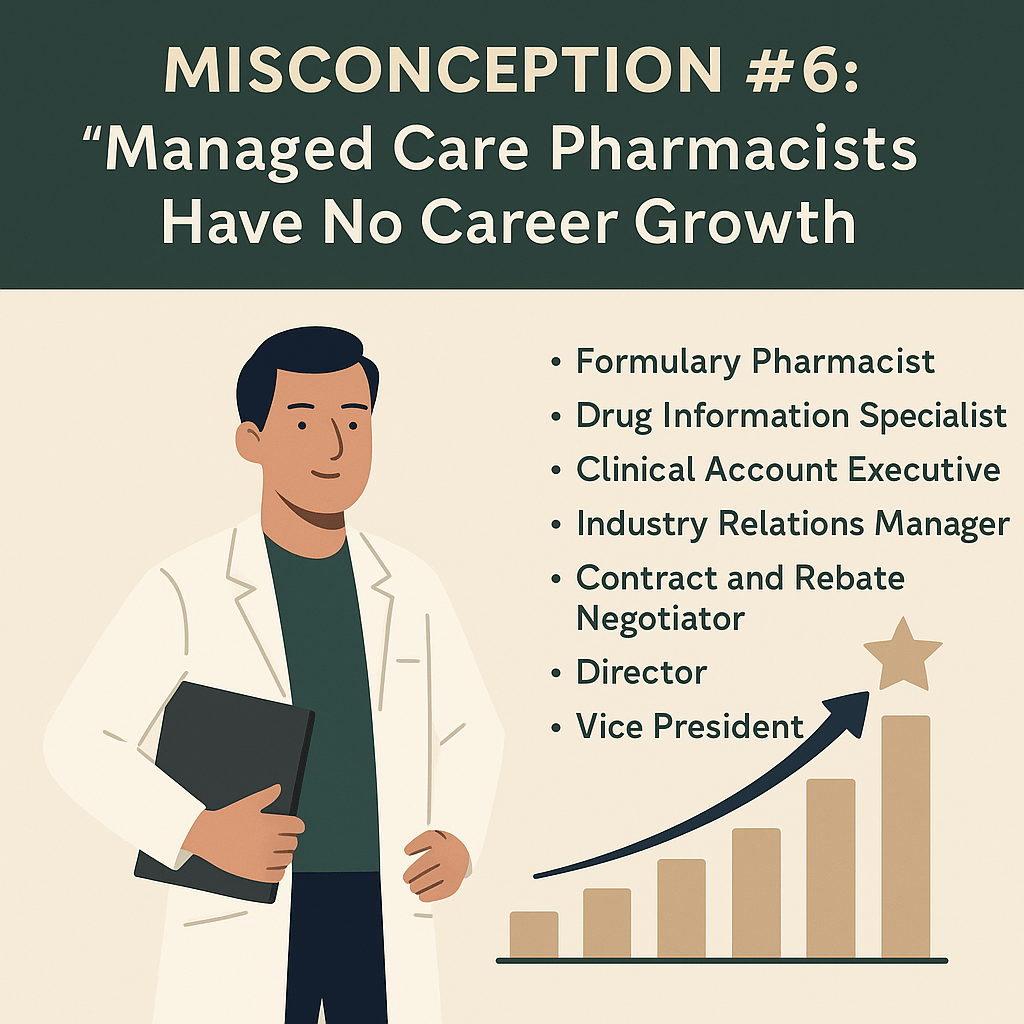
Misconception #6: “Managed Care Pharmacists Have No Career Growth”
Another common misconception is that managed care pharmacists are locked into one narrow type of role – often imagined as being purely administrative or financially driven.
The truth is, managed care pharmacy offers incredible opportunities for those who want to combine clinical knowledge with strategic leadership. Pharmacists in this space often develop a broad set of transferable skills, including business strategy, contract negotiation, cross-functional collaboration, and policy development. These skill sets are not only valuable within pharmacy but across the broader healthcare landscape.
Career advancement is not only possible – it’s expected. Many managed care pharmacists grow into roles such as:
- Formulary Pharmacist
- Drug Information Specialist
- Clinical Account Executive
- Industry Relations Manager
- Contract and Rebate Negotiator
- Director
- Vice President
When you combine clinical training with big-picture thinking, the opportunities are truly limitless.
Final Thoughts: A Call to Curiosity
If you’ve ever dismissed managed care pharmacy as uninteresting or inaccessible, I invite you to rethink that.
This field offers:
- Clinical depth
- System-wide influence
- Constant learning
- Opportunities to innovate
Whether you’re just starting to explore or already considering a career shift, I encourage you to reach out, ask questions, and see how you can get involved.
Together, we can help shape a future where pharmacy delivers maximum value, quality, and access for every patient.
To dive deeper, check out resources like AMCP, managed care pharmacy residency programs, or connect with professionals on LinkedIn.
 Managed Care Rx Insight