
Managed care pharmacy might not be the first path that comes to mind in pharmacy school – but for those who take the time to explore it, this field offers a fulfilling and impactful career that blends clinical knowledge with population health, policy, and strategy.
What Is Managed Care Pharmacy?
Managed care pharmacy focuses on optimizing medication use and improving patient outcomes within health plans. It combines clinical expertise with cost-effectiveness to ensure patients receive the right medications based on clinical guidelines and real-world evidence. Pharmacists in this field work with insurers, pharmacy benefit managers (PBMs), and healthcare systems to manage drug benefits, guide formulary decisions, and support population health initiatives.
Why Is It Gaining Interest Among Pharmacy Students?
Many students are drawn to managed care for its unique combination of clinical decision-making, policy influence, and structured work-life balance. It’s a path that offers the chance to impact care for entire populations, not just individual patients. Additionally, the non-traditional setting, often with remote or hybrid work opportunities, appeals to those looking for alternatives to retail or hospital roles. As healthcare becomes increasingly focused on value-based care and access to high-cost therapies, pharmacists who understand both clinical evidence and healthcare economics are in high demand.
What Do Managed Care Pharmacists Actually Do?
The scope of managed care pharmacy is broader than many realize. Depending on the organization, pharmacists in this space may:
- Develop and manage formularies
- Conduct prior authorization reviews
- Perform drug utilization reviews (DURs) and cost-effectiveness analyses
- Lead medication therapy management (MTM) programs
- Analyze health outcomes data to support coverage policies
- Work within government programs like Medicare or Medicaid
If you’re new to these terms, check out our post: Unpacking The Mystery: What Are The Key Concepts In Managed Care Pharmacy?
How Can Students Gain Exposure in School?
If you’re curious about managed care pharmacy, the earlier you start exploring, the better. Here are practical ways to get involved as a student:
Tip #1: Join AMCP (Academy of Managed Care Pharmacy)

AMCP is the go-to professional organization for students interested in managed care. As a member, you’ll gain access to:
- Educational content explaining what managed care pharmacists do
- Webinars, certificate programs, and foundational courses
- A residency resource center and mock interview programs
- The AMCP Foundation P&T Competition
- Scholarships, internships, and national networking events
Joining AMCP is more than just adding a line to your resume – it’s how you start understanding the field and build relevant skills.
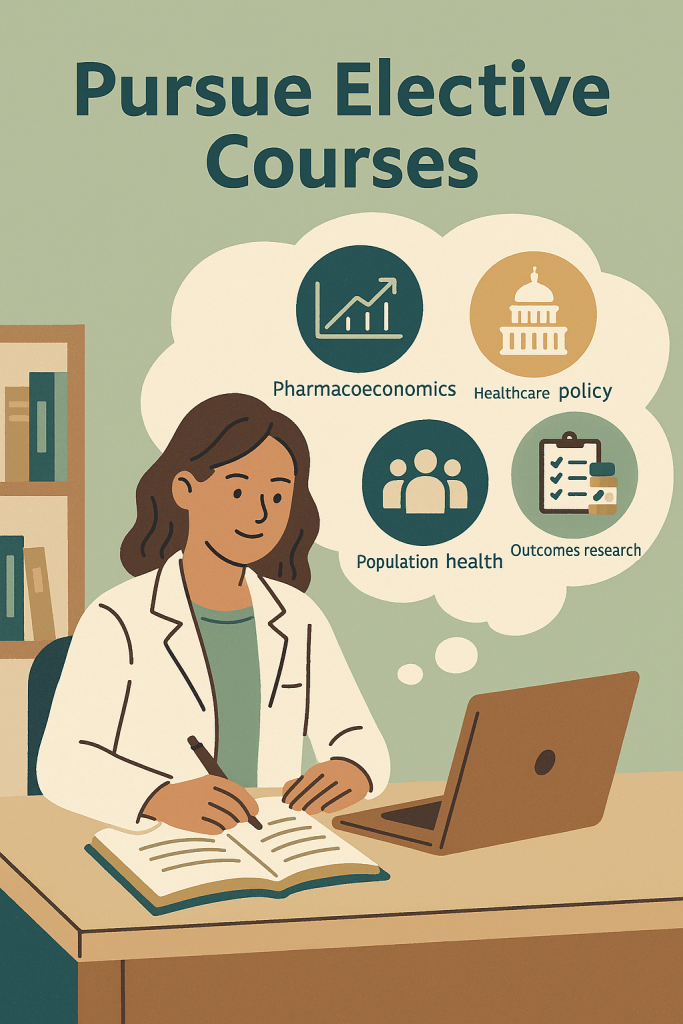
Tip #2: Pursue Elective Courses
If your curriculum allows, choose electives like pharmacoeconomics, healthcare policy, population health, or outcomes research. These courses help you build the foundational knowledge to understand how drug coverage decisions are made, how to evaluate clinical and economic evidence, and how healthcare systems function at a population level. Not only do these classes make you a stronger residency candidate, but they also help you speak the language of managed care pharmacists during interviews and networking events.
Tip #3: Attend Webinars & Conferences
Attending webinars and conferences – especially AMCP’s national and regional meetings – is incredibly valuable. These events offer a front-row seat to real-world discussions on formulary strategy, value-based care, drug pipeline reviews, and health policy trends. You’ll not only gain insights that go beyond the classroom, but also have the chance to network with pharmacists, residency preceptors, and recruiters.

Tip #4: Apply for IPPE/APPE Rotations in Managed Care
One of the most effective ways to break into managed care pharmacy is through direct experience during your rotations. If your school offers IPPE or APPE opportunities with health plans, PBMs, MTM vendors, or government agencies, take full advantage of them. These rotations allow you to see the day-to-day responsibilities of managed care pharmacists, such as reviewing prior authorizations, participating in formulary discussions, or analyzing population health data. Not only do these experiences solidify your interest (or help you rule it out), but they also set you apart as a candidate for residency or entry-level roles.
Tip #5: Get Involved in Research or Value-Based Projects
Participating in research – especially projects focused on outcomes, pharmacoeconomics, or health policy – can give you a competitive edge in managed care. These experiences show that you’re comfortable working with data, analyzing clinical evidence, and thinking about healthcare on a systems level. Whether it’s through a faculty-mentored project, capstone course, or collaboration with a residency program, research helps you develop skills in literature evaluation, data interpretation, and presenting findings – all of which are crucial in managed care roles. Bonus: a poster or publication can make your CV stand out to residency programs or hiring managers.

Is a Residency Required?
While a Managed Care Pharmacy Residency is the most direct route into the field, it’s not the only one. If you’re serious about launching a career in managed care pharmacy, completing a PGY1 Managed Care Residency can give you a significant head start.
These programs provide structured training in formulary management, utilization management, policy development, outcomes research, and payer strategy. You’ll get hands-on experience with real-world decision-making, sharpen your clinical and analytical skills, and work closely with preceptors and mentors who are leaders in the field. A residency also opens doors to mid-level or advanced roles more quickly and gives you a strong professional network to tap into after graduation. For students without a managed care rotation or prior experience, a residency can be the bridge that connects your interest to a full-time role.
If residency isn’t your path, consider entry-level roles in MTM or prior authorization, or apply directly to payer-racing roles at PBMs of health plans, especially if you have strong managed care exposure during school.
Final Thoughts
Managed care pharmacy is more than just a “behind-the-scenes” career – it’s where pharmacy, public health, data, and policy come together. If you’re a student looking for a way to combine your clinical skills with big-picture thinking, this could be the path for you. Start exploring early, ask questions, and get involved. You just might discover a path that’s not only rewarding – but one that shapes the future of healthcare.
 Managed Care Rx Insight